
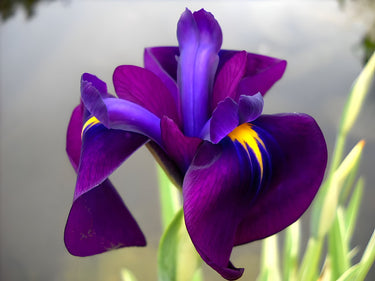


Iris ensata 'Variegata' - Variegated Japanese Iris, Bog Plant (RHS AGM)
 Iris ensata 'Variegata' - Variegated Japanese Iris, Bog Plant (RHS AGM)
£8.80
/

products.product.pickup_availability.unavailable
Delivery & dispatch
This item is available to pre-order and will be dispatched as soon as stock is ready. Estimated availability dates are provided where possible but may be subject to change.
Once available, orders are typically processed within 1–3 business days.
- Standard (1-3 days) via trusted couriers.
Orders are processed within 1-3 business days after payment confirmation. Orders placed on weekends or public holidays are processed the next business day.
- Standard (1-3 days) via trusted couriers.
- Express (1-2 days) - choose at checkout.
Shipping costs are calculated at checkout based on size, weight and destination. Please unpack your plants as soon as they arrive.
Peat-free, recycled growing media
We use a recycled, peat free growing mix made in Lincolnshire: coir with around 20% silt loam. The coir keeps it light and free draining; the silt loam adds structure and holds moisture and nutrients.
How fresh plants are packed & sent
We pack across two sites. Site 1 (packing and distribution): oxygenating bunches, loose lilies, aquarium plants, snails, pots and pond packs. Site 2 (growing site): potted lilies, potted plants, plugs, floating plants, tropical plants and fruit trees.
We start processing orders at 8am. Orders with Site 2 items are dispatched the following day; Site 1-only orders usually go the same day. We have five collections a day. If there are delays in busy periods we post updates on social media and the website.
Your payment information is processed securely. We do not store credit card details nor have access to your credit card information.

Iris ensata 'Variegata' is a Japanese iris with grey-green leaves striped creamy-white and deep purple flowers in June and July. It holds the RHS Award of Garden Merit.
Variegated Japanese iris at a glance
| Botanical name | Iris ensata 'Variegata' |
|---|---|
| Common name | Variegated Japanese iris |
| Plant type | Clump-forming iris; dies back in winter |
| Height and spread | About 80 cm tall, 45–60 cm wide |
| Flowers | Deep purple with a red sheen, June and July |
| Position | Full sun or part shade |
| Soil | Moist to wet, rich, acid soil |
| Pond depth | None in winter – bog garden or damp soil |
| Hardiness | RHS H6 – hardy in a very cold winter (-20 to -15°C) |
| Native to | East Asia (not UK native) |
Can Iris ensata grow in a pond?
Not all year. It likes plenty of water in summer but does not tolerate waterlogged soil or standing water in winter. Grow it in a bog garden or damp border, or lift pots out of the pond in autumn.
What soil does it need?
Moist, rich, acid soil. It does poorly on chalk or alkaline soil, so use ericaceous compost in pots.
How to plant and care for it
Plant in spring or summer. Cut back after flowering and divide from midsummer to early autumn.
Is it poisonous?
Yes. Irises are harmful if eaten by people or pets, and the sap can irritate skin, so wear gloves when handling it.
Bare-root plants (7 cm, 9 cm, 1 litre and 3 litre) arrive without a pot or compost and are the most economical way to plant a group. Potted plants (9 cm, 1 litre and 3 litre) arrive growing in our peat-free compost and give a faster display. Packs of 3 come in 7 cm, 9 cm, 1 litre and 3 litre bare-root sizes and cost less per plant. The 2x Pot & Compost option is two plants supplied with pots and compost.
Sizes shown with a line through them are currently unavailable.
Why you'll love it
- Maximum Height: 60 - 90 cm (24 - 35 inches)
- Maximum Spread: 45 - 60 cm (18 - 24 inches)
- Blooming Months: June - July
- Light Requirements: Full Sun to Partial Shade
- Difficulty: Medium
Key facts
When to plant & when it flowers
PlantingPlanting & care
Most pond plants thrive in full sun, with at least 4–6 hours of sunlight daily for the best growth and flowering.
Plant aquatic plants in suitable aquatic baskets using aquatic compost to help support healthy root development and prevent soil from clouding the water.
Position plants at the correct water depth, as different varieties prefer marginal, shallow, or deep-water conditions.
Water lilies and oxygenating plants help improve water quality, provide shade, and create a healthier environment for fish and wildlife.
Planting help for this plant
Know what to plant, and when
A short message when there's a job to do or fresh stock in. Choose email, WhatsApp, or both.
- Email, WhatsApp, or both - tick the ones you want
- Planting reminders for the season you're in
- Unsubscribe any time - reply STOP on WhatsApp
We only message you about what you tick. Privacy Policy.